
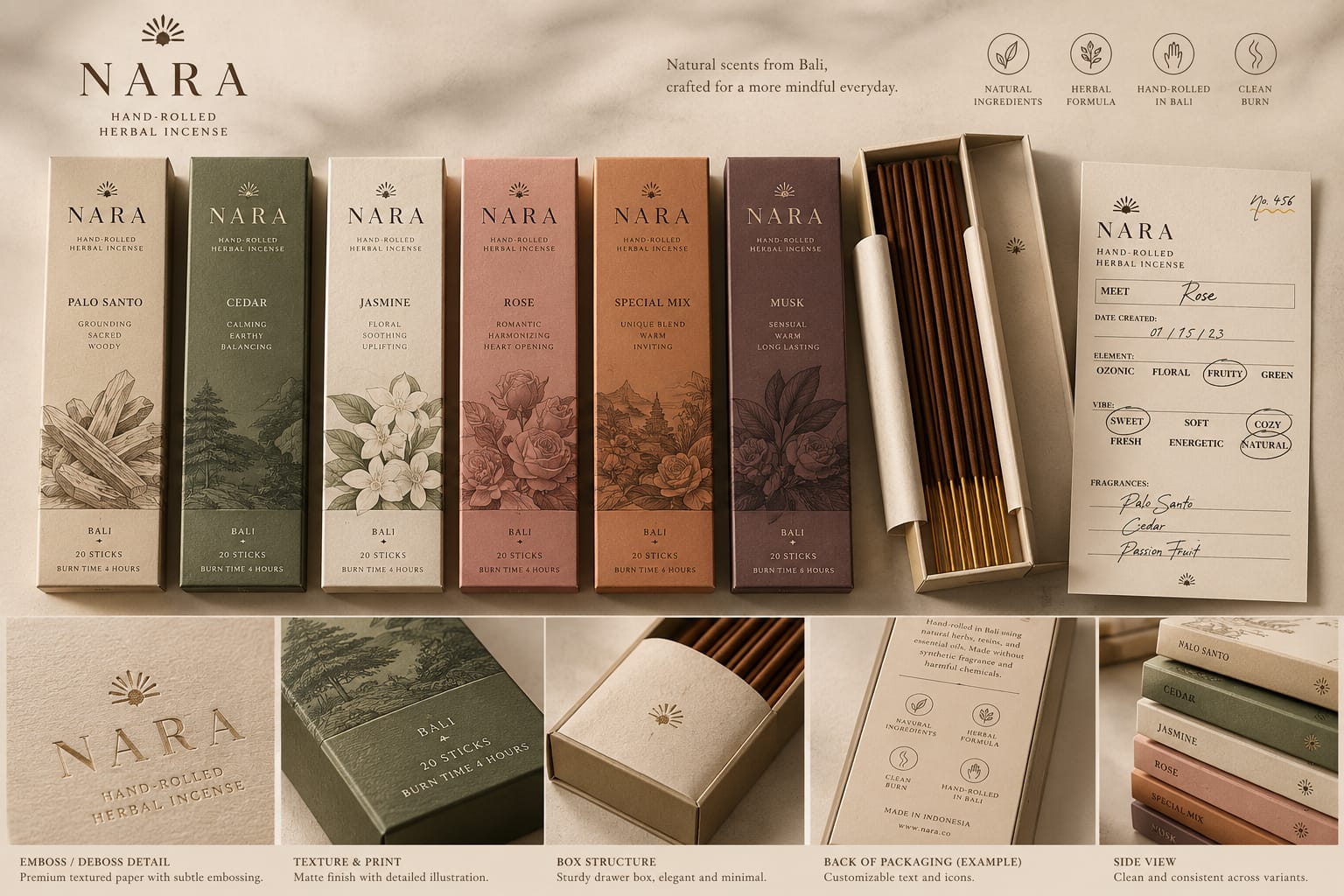
For incense businesses, packaging is one of the first things customers notice. A clear design can help communicate product information, create a recognizable brand identity, and present the product consistently across retail channels.
1. Choose a Clear Brand Direction
Before selecting a packaging design, define how you want your brand to be presented. Some brands may prefer a natural and understated appearance, while others may choose a modern, colorful, or premium-inspired visual direction.
Colors, typography, imagery, and layout should work together to create a consistent identity. A simple design can also make essential product information easier for customers to find.
2. Consider the Intended Sales Channel
Packaging requirements may differ depending on whether the product is sold through physical retail stores, online marketplaces, specialty shops, or wholesale distribution.
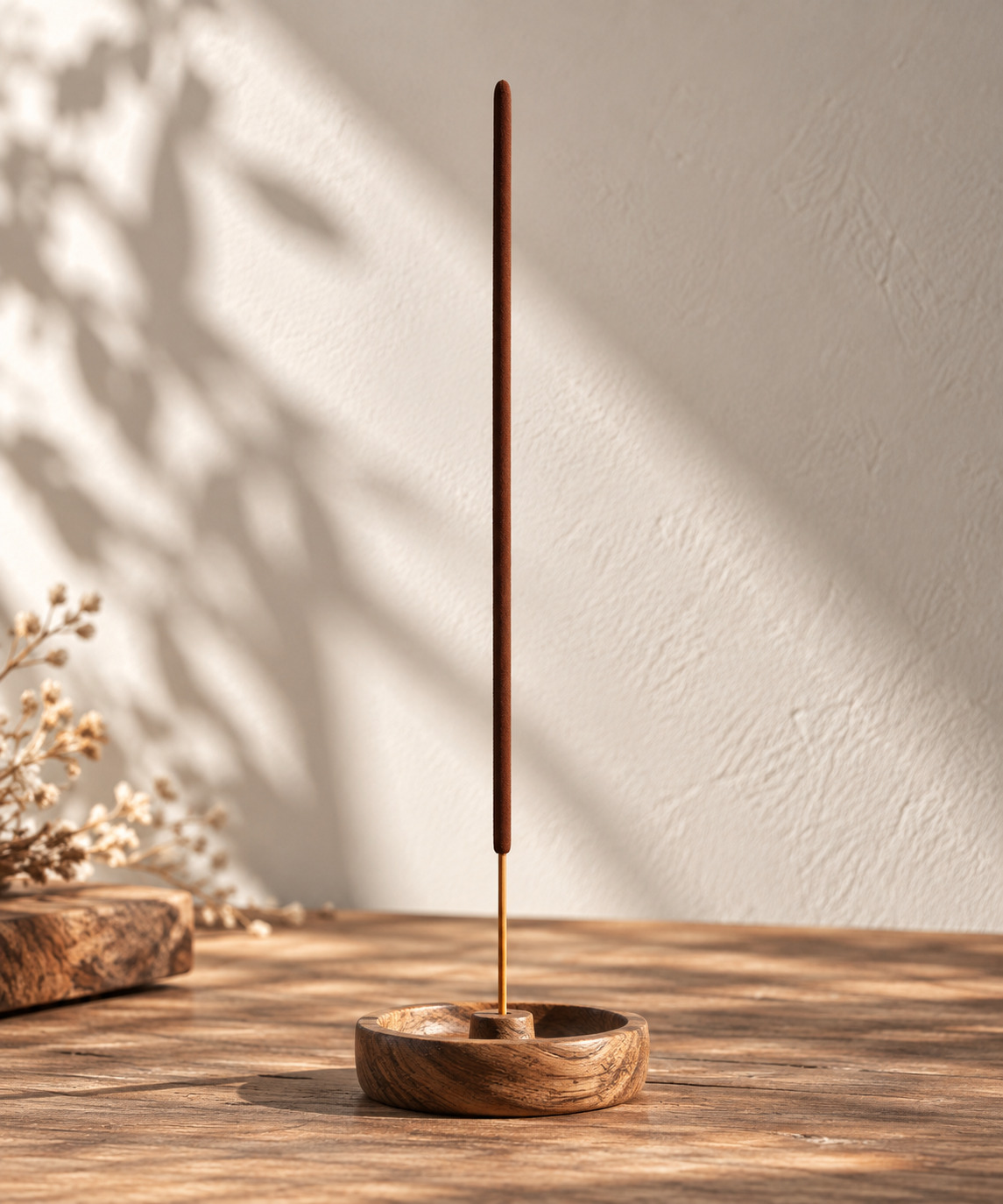
For online sales, clear product photographs and readable labels help customers understand what they are buying. For retail distribution, packaging dimensions, shelf presentation, product identification, and protection during handling may also matter.
3. Make Product Information Easy to Understand
Consider which details buyers need to see on the package. Depending on the product and destination market, this may include the product name, fragrance or variant, quantity, usage instructions, manufacturer or supplier details, and applicable warnings.
Labeling and packaging requirements can vary by destination country. Confirm the applicable rules before finalizing artwork or printing packaging for export.
4. Explore Private Label Customization
Private label arrangements allow a business to explore presenting products under its own brand identity. Depending on the supplier's capabilities and agreed specifications, customization discussions may cover artwork, label design, packaging format, product variants, and product presentation.
Before requesting a quotation, prepare your preferred design direction, target market, estimated order quantity, packaging requirements, and any reference images. These details can help suppliers understand your project more clearly.
5. Balance Appearance and Practicality
Packaging should support the brand visually while remaining practical for storage, handling, and transportation. Consider the packaging's durability, dimensions, material options, and how the product will be packed for shipment.
Material selection and sustainability claims should be based on verified specifications. Avoid describing a package as recyclable, biodegradable, or environmentally friendly unless the relevant characteristics can be substantiated.
Preparing Your Private Label Brief
A useful project brief can include your brand name, target customer, destination country, preferred packaging style, product variant, expected quantity, and reference designs. You can also indicate whether you already have finished artwork or need to discuss design options.
Clear requirements make it easier to discuss feasibility, pricing, lead times, and the next steps with a potential supplier.